


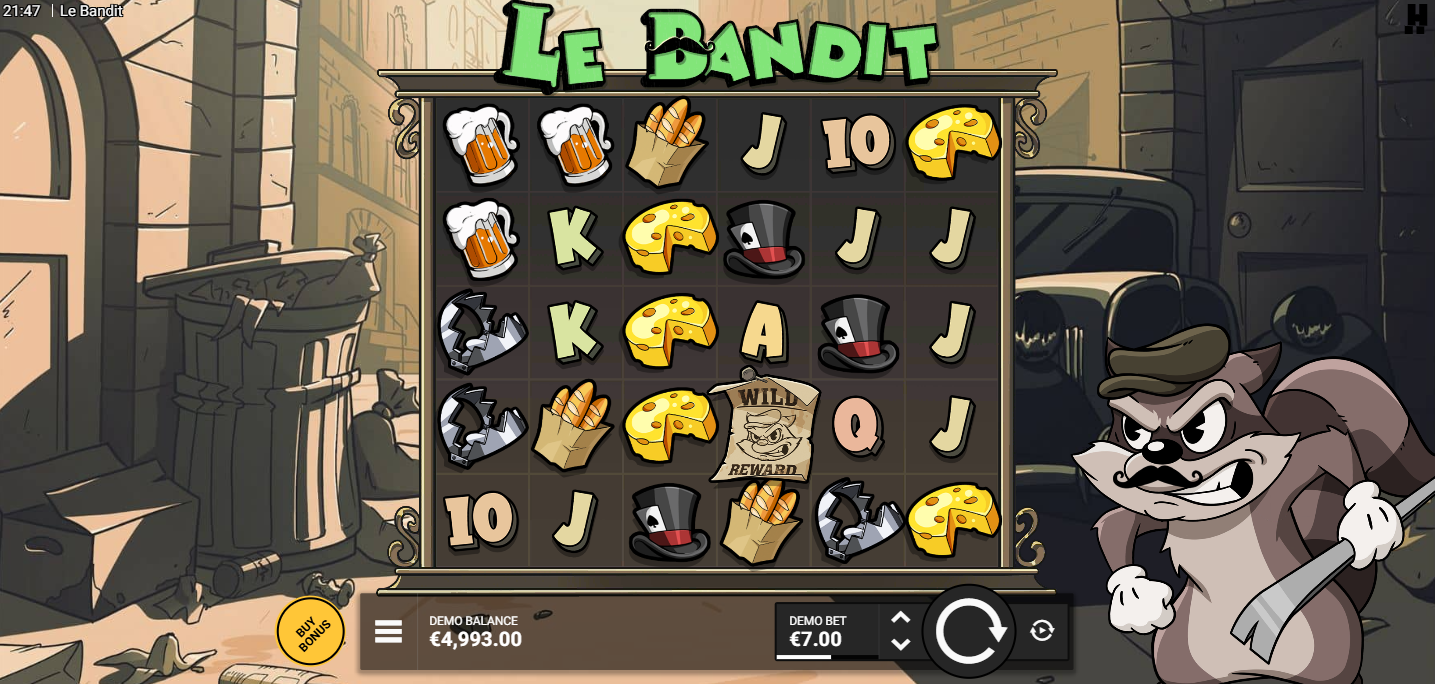
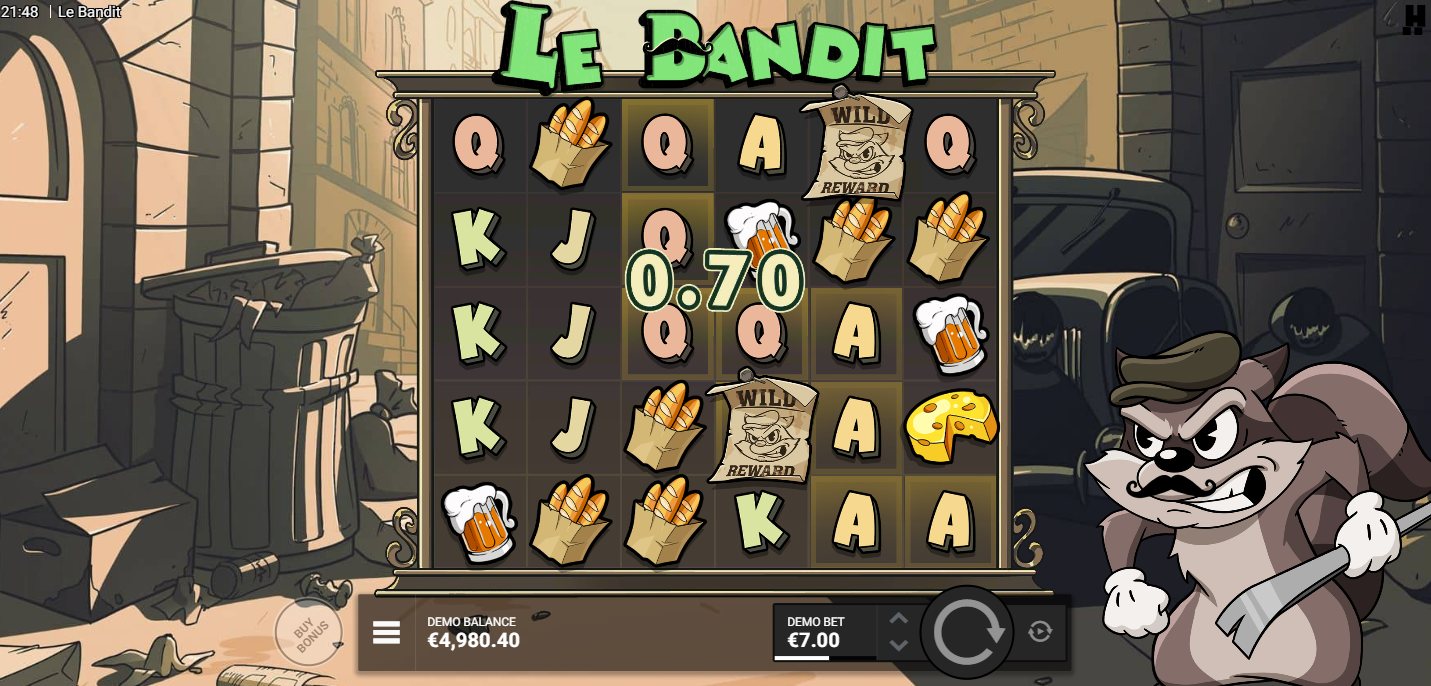
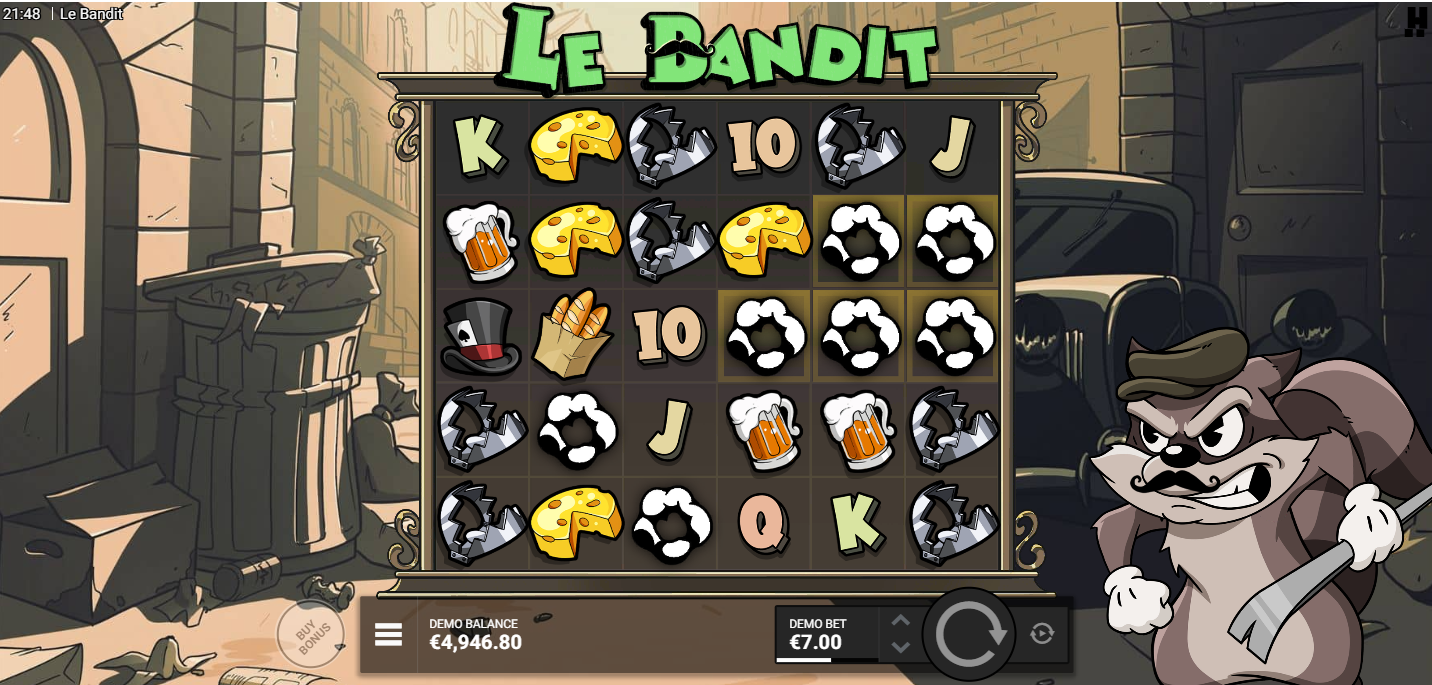
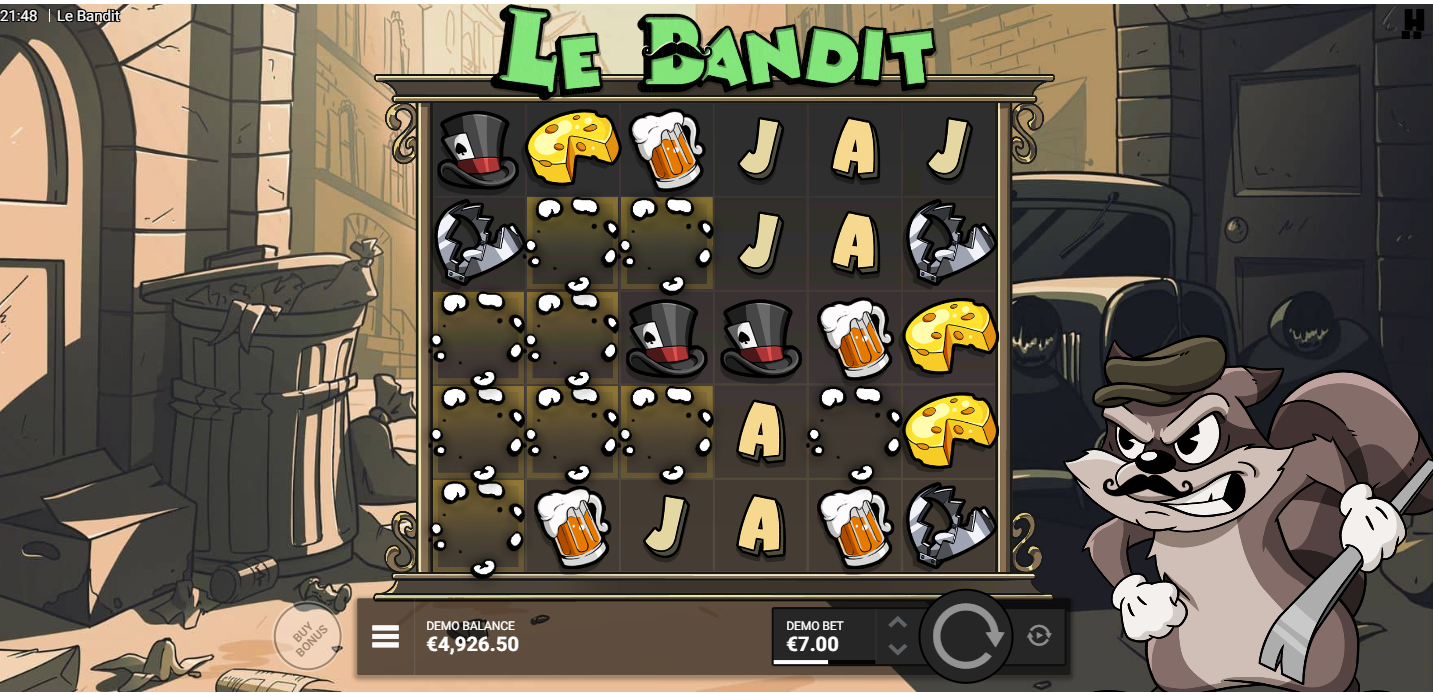
Le Bandit 2 Review
I am Mark D. Griffiths, and in this extended analytical review I examine Le Bandit 2 through the lenses of volatility structure, behavioral engagement, multiplier mechanics, and long-term sustainability within the modern online slot ecosystem. This article is written for serious players, affiliates, and industry observers who require structural clarity rather than promotional surface commentary.
Le Bandit 2 is not merely a sequel. It is a recalibrated volatility model. While the original title introduced multiplier-driven outlaw mechanics, this installment refines pacing, strengthens escalation layering, and enhances structural transparency.
Core Game Identity
Le Bandit 2 is engineered around exponential amplification. Instead of distributing payout value evenly across frequent small wins, the title concentrates return expectation within multiplier-driven bonus sequences.

The base game serves primarily as a tension-building phase. The bonus structure functions as the release mechanism. This asymmetrical design is characteristic of modern high-volatility slots.
The identity of Le Bandit 2 is defined by:
Structured escalation
Multiplier stacking logic
Bonus-centric payout concentration
High-impact win ceiling
Thematic Evolution and Visual Design
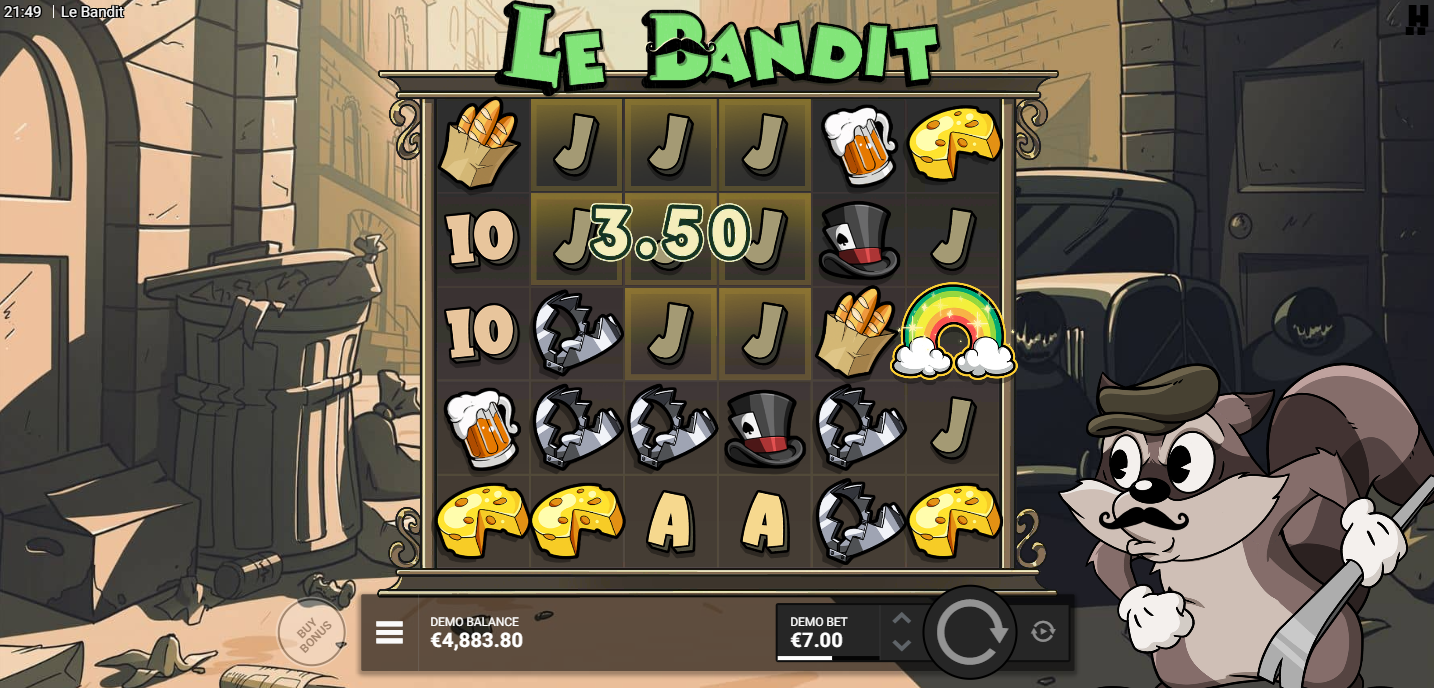
The French outlaw theme remains intact but refined. Visual presentation is sharper and less cluttered. Interface elements are optimized for multiplier readability during escalation phases.
Animation pacing avoids overwhelming players during high-intensity moments. This clarity is important because multiplier stacking requires visual transparency. Players must understand progression to remain engaged.
The theme supports identity but does not distract from mechanical core.
Volatility Architecture
Volatility is the defining structural characteristic of Le Bandit 2. The game operates within a medium-high to high volatility spectrum depending on jurisdictional configuration.
In practical terms, this means:
Extended neutral cycles are statistically normal
Large wins are rare but structurally meaningful
Bonus activation concentrates payout potential
The payout distribution curve is skewed. A significant portion of theoretical return is allocated to higher-tier events rather than micro-level base wins.
RTP and Regulatory Framework
The theoretical return to player typically ranges between 94 and 96 percent depending on jurisdiction and operator configuration. Regulatory environments influence RTP variants and feature availability.
Understanding regulatory oversight is essential when evaluating slot availability and payout structures.
Gambling Regulatory Authorities by Country
| Country | Authority | Official Website |
|---|---|---|
| United Kingdom | UK Gambling Commission | Official Website |
| Malta | Malta Gaming Authority | Official Website |
| Sweden | Spelinspektionen | Official Website |
| Germany | GGL | Official Website |
Multiplier Mechanics
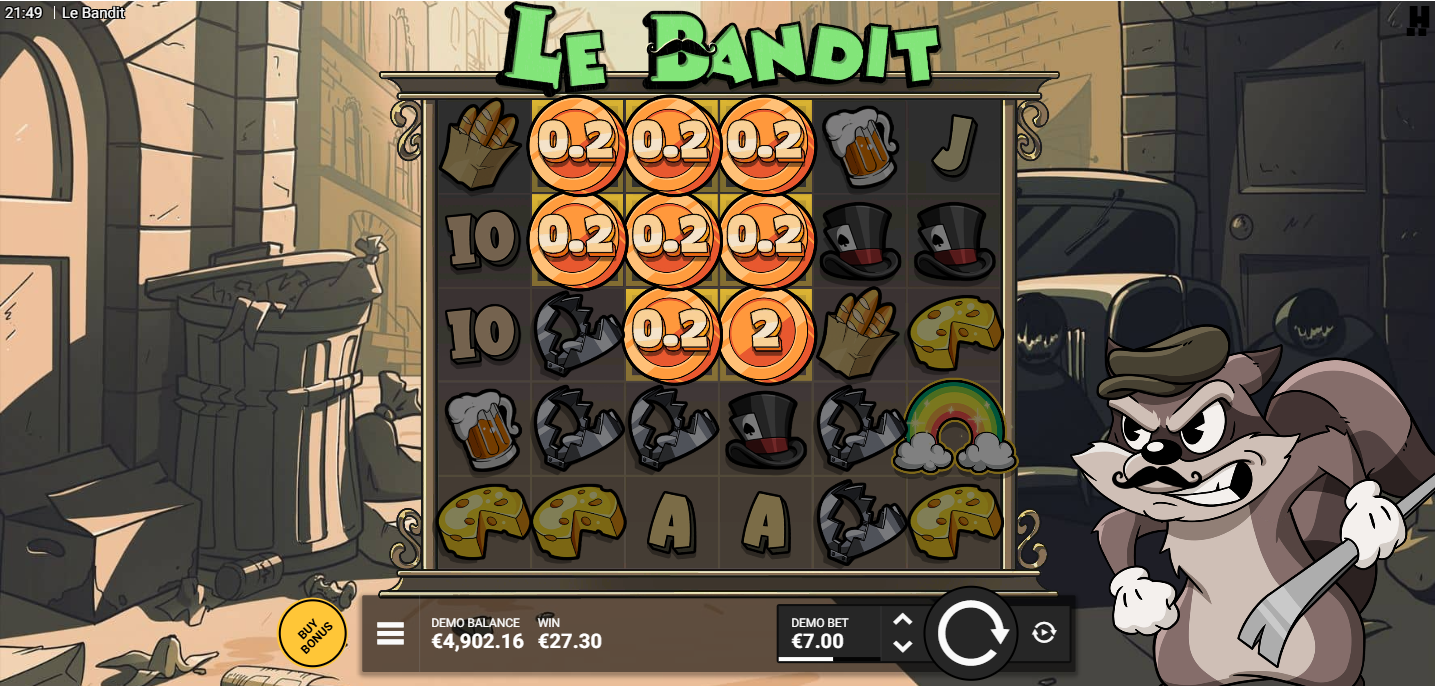
Multipliers are the central mechanical pillar of Le Bandit 2. They function progressively rather than statically. During qualifying sequences, multiplier values accumulate, increasing payout amplification exponentially.
This transforms gameplay psychology. Players track multiplier growth instead of individual wins. Continuity becomes more important than frequency.
Mathematically, multiplier escalation increases variance. The win curve widens. Most sessions remain moderate, but occasional sequences generate disproportionate outcomes.
Bonus Structure
The bonus feature activates through defined triggers and introduces accelerated multiplier dynamics. During bonus rounds:
Multiplier stacking probability increases
Win sequences can extend
Escalation potential intensifies
The bonus is designed as a volatility amplifier rather than a cosmetic add-on.
Industry Research and Market Context
Understanding broader industry context is critical when evaluating slot sustainability.
Research and Industry Bodies by Country
| Country | Research / Industry Body | Website |
|---|---|---|
| United States | American Gaming Association | Official Website |
| Australia | ACMA | Official Website |
| Canada | iGaming Ontario | Official Website |
| Denmark | Spillemyndigheden | Official Website |
Conceptual Payout Distribution Visualization
Below is a responsive interactive chart illustrating conceptual payout concentration across gameplay phases.
Mathematical Distribution and Skewness
High-volatility slots are defined by skewed payout curves. In Le Bandit 2, theoretical return is not evenly distributed across spins. Instead, a significant share of the RTP is concentrated in a small percentage of outcomes.
This skewness produces three measurable effects:
First, long neutral cycles become statistically normal rather than exceptional. Second, bonus rounds carry disproportionate financial weight within overall RTP. Third, rare high-tier outcomes dramatically impact long-term averages.
The mathematical implication is simple but important. Over a sufficiently large sample size, RTP converges toward its theoretical percentage. Over short sessions, variance dominates. The emotional experience of the player is shaped by variance, not theory.
Le Bandit 2 embraces this structure deliberately. It does not attempt to disguise volatility through frequent low-value payouts. Instead, it preserves tension.
Multiplier Escalation and Exponential Growth
The most defining feature of Le Bandit 2 is multiplier escalation. Unlike static multipliers that apply a fixed value to a single win, this game allows amplification to grow during sequences.
From a modeling standpoint, exponential growth mechanisms widen outcome variance. If a multiplier doubles repeatedly within a bonus chain, the resulting payout distribution becomes non-linear.
This is where the excitement of the game resides. Linear reward systems feel predictable. Exponential systems feel dramatic.
However, exponential systems also increase risk dispersion. Most sequences end early. A minority extend into high amplification phases. That minority defines the identity of the slot.
Psychological Engagement Mechanisms
Volatility alone does not sustain engagement. Structure does. Le Bandit 2 integrates anticipation loops into its multiplier design.
Small base wins provide intermittent reinforcement. Near-bonus triggers create expectancy. Multiplier growth introduces perceived progression. Each of these elements activates cognitive anticipation pathways.
The psychological dynamic is layered:
Anticipation of trigger
Anticipation of continuation
Anticipation of amplification
This layered anticipation generates sustained engagement even during neutral cycles. The player is not simply waiting for a win. The player is waiting for escalation.
As I analyze this structure, I observe that Le Bandit 2 balances intensity with clarity. Multiplier values are visible. Progression is readable. This transparency strengthens emotional investment.
Bonus Buy Considerations
In jurisdictions where permitted, bonus buy functionality significantly alters variance exposure. Purchasing direct access to the bonus phase compresses volatility into fewer spins.
From a mathematical standpoint, bonus buy increases short-term variance while preserving long-term RTP structure. It reduces the neutral phase and accelerates exposure to escalation.
However, this acceleration also increases risk concentration. Players who use bonus buy frequently will experience greater bankroll fluctuation.
Responsible bankroll management becomes even more critical in this configuration.
Session Strategy and Bankroll Structure
Because Le Bandit 2 is built on concentrated payout distribution, session length influences experience quality.
Short sessions may not reach multiplier escalation phases. Medium sessions increase exposure to bonus triggers. Long sessions approach statistical expectation more closely but remain subject to variance.
A structured approach includes:
Defined bankroll allocation
Pre-set loss thresholds
Clear stop-win boundaries
Avoidance of emotional bet escalation
Flat betting often stabilizes variance better than aggressive stake scaling in high-volatility environments.
Competitive Positioning in the Multiplier Segment
The multiplier slot segment is highly competitive. Many titles promise high ceilings. Few deliver structural clarity.
Le Bandit 2 distinguishes itself through pacing discipline. Escalation unfolds gradually. Multiplier values build transparently. There is less reliance on hidden jackpot mechanics and more emphasis on visible progression.
This clarity strengthens brand identity. Players can understand what is happening during bonus phases. The experience feels intense but not chaotic.
In comparative terms, Le Bandit 2 sits alongside other high-variance multiplier-driven titles but differentiates itself through readability and controlled escalation tempo.
Mobile Performance and Technical Stability
Modern slot consumption is predominantly mobile. Le Bandit 2 demonstrates strong responsiveness across screen sizes. Interface scaling preserves multiplier readability. Animation timing remains smooth without excessive latency.
Technical reliability is not a trivial matter. In high-volatility slots, bonus rounds represent emotional peaks. Any interruption during escalation damages immersion and trust.
Le Bandit 2 maintains stability during these peak phases, reinforcing player confidence.
Long-Term Franchise Sustainability
The sustainability of a slot depends on adaptability. Le Bandit 2’s core mechanic is modular. Multiplier ceilings can evolve. Bonus structures can expand. Visual themes can refresh without altering the volatility framework.
This modularity provides franchise resilience.
High-volatility identity remains attractive in competitive markets. As long as escalation remains structured and readable, the Le Bandit brand retains growth potential.
Behavioral Responsibility and Risk Awareness
High-intensity slots require responsible framing. Emotional spikes during multiplier growth can distort risk perception.
Players should remain aware that:
Each spin is independent
Past outcomes do not influence future probability
Escalation phases are rare relative to total spins
Variance is inherent, not avoidable
Clarity reduces misinterpretation. Responsible engagement supports sustainability.
The Evolution of High-Volatility Slot Design
Over the last decade, the slot industry has moved away from flat payout structures. Earlier models emphasized frequent low-value reinforcement. Modern design increasingly favors asymmetrical payout distribution.
The reasons are structural and behavioral.
High-volatility slots generate stronger emotional peaks. These peaks create memorable sessions. Memorable sessions drive return engagement. Multiplier stacking mechanics amplify this effect by introducing visible escalation rather than hidden probability spikes.
Le Bandit 2 fits squarely within this evolution. Its identity is not built around constant stimulation. It is built around structured suspense.
Player Segmentation and Behavioral Fit
Not all players engage with volatility in the same way. Based on observed behavioral patterns, Le Bandit 2 appeals most strongly to three profiles.
Risk-tolerant players who accept variance
Bonus hunters who prioritize escalation potential
Strategic players who value multiplier transparency
It is less suited to low-variance entertainment seekers.
From a behavioral standpoint, volatility alignment is crucial. Mismatch between player expectations and payout structure often leads to dissatisfaction. Proper positioning of Le Bandit 2 reduces that risk.
Competitive Strength Indicators
Below is a strategic overview of Le Bandit 2’s competitive strengths, presented as independent cards rather than a conventional table. Each card highlights a distinct structural advantage.
These strengths collectively position Le Bandit 2 as a disciplined multiplier-driven title rather than a visually overloaded novelty release.
Volatility Concentration Model
To better illustrate how payout value is concentrated across gameplay phases, the following interactive chart demonstrates conceptual allocation of theoretical return.
The visualization is responsive and optimized for both desktop and mobile layouts.
This model reinforces a central observation. The majority of spin frequency generates lower-tier outcomes, while a smaller proportion of sequences drives the majority of payout value.
Future Outlook
The multiplier-driven slot category shows no signs of contraction. On the contrary, it continues to expand as players gravitate toward visible escalation systems.
Le Bandit 2 aligns with this trajectory because its architecture is modular. Multiplier ceilings can be increased in future iterations. Bonus structures can evolve. Visual presentation can refresh without altering volatility identity.